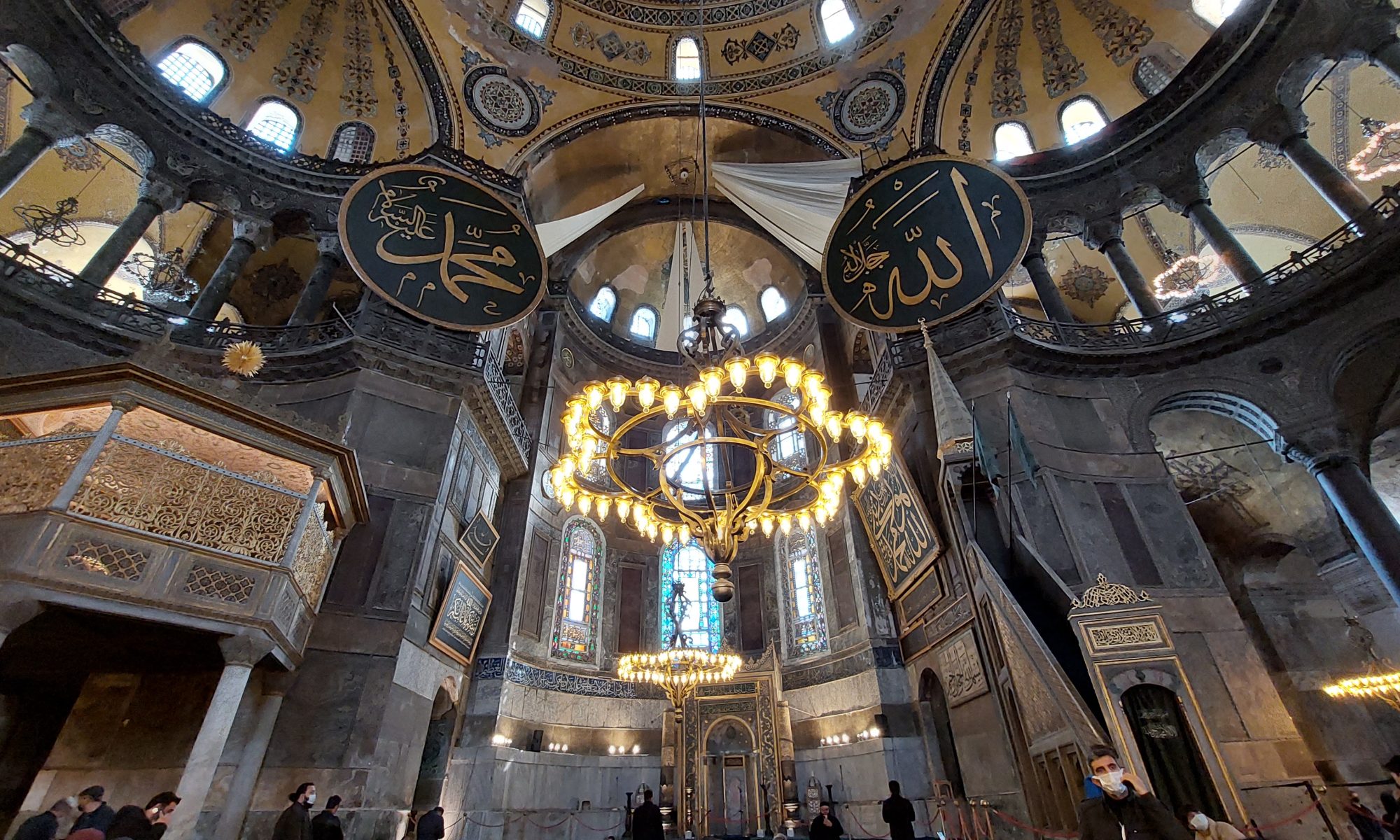
myRMnews – Keberadaan Koruptor BLBI Agus Anwar bersama pejabat tinggi pemerintah saat Konferensi Perubahan Iklim Dunia (UNCCC) di Bali bukan isapan jempol belaka. Ini benar-benar kenyataan. Continue reading “Koruptor BLBI Agus Anwar Pakai Nama Tionghoa “Koh””
Koruptor BLBI Agus Anwar Duduk di Belakang Jenderal Sutanto
myRMnews – Anggota Komisi VII DPR Ade Daud Nasution adalah orang pertama yang memberikan kesaksian bahwa koruptor Bantuan Likuiditas Bank Indonesia (BLBI) Agus Anwar duduk berdampingan dengan Menteri ESDM Purnomo Yusgiantoro di sela-sela Konferensi Perubahan Iklam Dunia (UNCCC) di Bali. Continue reading “Koruptor BLBI Agus Anwar Duduk di Belakang Jenderal Sutanto”
Hadapi Tahun Tikus, Koruptor Siapkan Strategi Baru
myRMnews – Pengamat politik Adhie M. Massardi pesimistis dengan langkah pemerintah dalam memberantas para koruptor pada 2008 yang disebut sebagai Tahun Tikus. Continue reading “Hadapi Tahun Tikus, Koruptor Siapkan Strategi Baru”
Menanam 79 Juta Pohon
Oleh: Harsutejo
“Menanam Sejuta Pohon”, ini salah satu seruan tersohor Bapak Pembangunan Suharto ketika masih berkibar-kibar kekuasaannya. Apa artinya seruan bagus jika tidak pernah dilaksanakan, dibuat perencanaannya pun tidak. Continue reading “Menanam 79 Juta Pohon”
Kejujuran, Jangan Dibeli di Gramedia (Kisah Afifa dan Lukisannya)
Ini sebuah kisah kecil, yang mungkin tidak ada hubungannya dengan nama-nama besar yang sudah terpampang di belantara bisnis media. Anak kami si kecil Afifa memiliki kesukaan yang teramat sangat pada dunia menggambar. Usianya menjelang 9, ia kelas 3 Sekolah Dasar. Continue reading “Kejujuran, Jangan Dibeli di Gramedia (Kisah Afifa dan Lukisannya)”
Menimbang Sartono Kartodirdjo dan Onghokham
Oleh: Asvi Warman Adam
Mengenang Sejarawan “Gerakan Petani” dan “Ratu Adil” Continue reading “Menimbang Sartono Kartodirdjo dan Onghokham”
SMS Ulang Tahun yang Kecepatan Satu Hari
Barusan saya kirim pesan pendek untuk istri. Mengucapkan selamat ulang tahun Continue reading “SMS Ulang Tahun yang Kecepatan Satu Hari”
Risang Mengabarkan Dirinya akan Dieksekusi
Tadi siang waktu Honolulu saya mendapat pesan pendek dari Risang Bima Wijaya, seorang kawan jurnalis di Bangkalan. Dalam pesan pendek itu Risang mengatakan bahwa tadi malam waktu Indonesia (Minggu, 09/12) pukul 22.30 dia ditangkap dan ditahan Polres Bangkalan. Hari ini waktu Indonesia (Senin, 10/12) dia akan dipindahkan ke Jogjakarta, untuk selanjutnya dipenjara.
Saya telah membalas pesan pendek itu, dan meminta agar Risang tetap semangat…
Apa yang terjadi atas diri Risang? Continue reading “Risang Mengabarkan Dirinya akan Dieksekusi”
Unsyiah Kembangkan Pusat Studi Tsunami
BRR – Universitas Syiah Kuala Banda Aceh berkerjasama dengan Universitas Kobe dan Badan Rehabilitasi dan Rekonstruksi (BRR) NAD-Nias menggelar International Workshop & Expo Pengurangan Risiko Bencana (Disaster Risk Reduction) pada tanggal 8-11 Desember 2007. Workshop ini diharapkan bisa memberikan pengetahuan bagi warga tentang tatacara penyelamatan diri saat bencana. Continue reading “Unsyiah Kembangkan Pusat Studi Tsunami”
Berikan Saja Biskuit, Permen, Susu Kotak…
 Kita membuang Rp 1,5 milyar receh setiap hari
Sadarkah Anda, bahwa kita, penduduk Jakarta, setiap harinya membuang uang receh hingga mencapai 10 digit setiap harinya, ke jalanan. Mari kita berhitung. Jumlah anak jalanan di Jabodetabek saat ini berdasarkan data terakhir dari Komisi Nasional Perlindungan Anak (Komnas PA) mencapai angka 75.000. Continue reading “Berikan Saja Biskuit, Permen, Susu Kotak…”
The Tale of Klinting Ireng and Klinting Kuning
You currently appear offline to intansantosa
intansantosa
hi yah..
teguh_timur
muach…
udah baca tere mujshe? Continue reading “The Tale of Klinting Ireng and Klinting Kuning”
Flood Alert, Campus open to Business
THIS is to inform you that the University of Hawaii at Manoa is open for business today. A flash flood watch, issued by the National Weather Service, continues to be in effect for all the Hawaiian Islands (see below). Continue reading “Flood Alert, Campus open to Business”
Writing A History of Nationalism
NATIONALISM is acknowledged as an outcome of historical aspect of human being. In his monumental book “The Idea of Nationalism” (first published in April 1944), historian and philosopher Hans Kohn underlines that as a state of mind and an act of consciousness, nationalism is the product of the growth of social and intellectuals’ factors at certain stage of history. Continue reading “Writing A History of Nationalism”
Perdebatan Asas Pancasila Capai Kesepakatan
 Kompas – Perdebatan soal asas dalam pembahasan Rancangan Undang-Undang Partai Politik akhirnya mencapai kata sepakat. Rumusan asas dalam UU Nomor 31 Tahun 2002 tetap dipertahankan, tapi ditambahkan satu ayat baru sehingga total menjadi tiga ayat. Continue reading “Perdebatan Asas Pancasila Capai Kesepakatan”
Tera Mujhse Hai Pehle (Sekali-kali Lagu India…)
“Bang ini lagu yang dulu sering kita dengar bersama Mama.”
“Oh ya, lagu apa?”
“Lagu India.” Continue reading “Tera Mujhse Hai Pehle (Sekali-kali Lagu India…)”
Pembayaran Utang Melonjak Rp 7,2 Triliun
Kompas – Pembayaran utang luar negeri pada tahun 2007 diperkirakan akan melonjak Rp 7,2 triliun dibandingkan dengan perkiraan awal dalam APBN Perubahan atau APBN-P 2007. Hal itu disebabkan terjadinya kenaikan asumsi nilai tukar rupiah dari prediksi awal di APBN-P 2007 sebesar Rp 9.050 per dollar AS menjadi Rp 9.125 per dollar AS. Continue reading “Pembayaran Utang Melonjak Rp 7,2 Triliun”
Topan Badai Terpa Hawaii
 Hujan deras dan badai halilintar diperkirakan akan terjadi di Pulau Oahu dan Pulau Kaui, Hawaii, sepanjang hari ini. Continue reading “Topan Badai Terpa Hawaii”
Yuk, Merenungkan Hukuman Mati
 Dari: Komunitas Sant’Egidio
Perihal: Undangan Malam Renungan Cities for Life – Cities Against Death Penalty Day Continue reading “Yuk, Merenungkan Hukuman Mati”
Bis Jangan Mogok Dong
Cerita ini mengenai kehidupan seorang petualang waktu. Berasal dari tempat dan lingkungan yang sangat mematuhi waktu. Dan waktu dari tempat asalnya telah membawanya bertualang, bersama waktu, menembus waktu, sampai pada waktunya, petualangan mereka berhenti. Stop, waktunya stop! Sekarang waktunya, untuk menikmati waktu, tak lebih dari 60 menit! Continue reading “Bis Jangan Mogok Dong”
Bagaimana Bung Karno Dicium Gadis Rusia?
Ini kisah tentang kunjungan Presiden Sukarno ke Moskow. Dalam jamuan makan malam di KBRI, Bung Karno menyempatkan diri berdansa dengan Nina Khrushchev, istri pemimpin besar Partai Komunis Uni Soviet, Nikita Khrushchev. Di ujung acara seorang wanita Rusia menciumnya.
Bagaimana bisa? Continue reading “Bagaimana Bung Karno Dicium Gadis Rusia?”
My First Thanksgiving Day (with pictures…)
 Hari Selasa, Tim mengirimkan sepucuk e-mail. Bunyinya:
Dear Sophan, Baipo, Brian, and Teguh, Continue reading “My First Thanksgiving Day (with pictures…)”
Kisah Sang Penerobos
Sepanjang karirnya di akedemik, pemerintahan maupun bisnis, julukan Sang Penerobos (Mr. Breakthrough) Continue reading “Kisah Sang Penerobos”
Penginapan Bu Broto…
Satu dari masa lalu…

Indonesia Accuses!
IT was in the morning of 29th December 1929, when a Dutch colonial inspector with half dozen of colonial recherché and around fifty policemen arrived in Soejoedi house in Yogyakarta.
They where looking for Sukarno, the chairman of Indonesian Nationalist Party who had visited the old city to deliver his speech in front of his party members. After one night arrested in Margangsan jail, the next day Sukarno was transferred to the Banceuy jail in Bandung where he prepared his pleidooi before delivered it in front of colonial court on 18th August 1930.
Note: This writing is based on Roger G Paget study on “Indonesia Accuses!”, published in 1975.
In 1965, Sukarno recalls how he prepared the pleidooi in his tiny and smelly cell in Banceuy. He had secured paper and ink from home, and dictionary from prison library. Writing his pleidooi was a backbreaking job; since he has no table to write, he used a two-feet-wide-by-two-feet-high water closet in his cell as a pad to write his speech, which later became a part of Indonesian political history, called Indonesia Menggugat or Indonesia Accuses. It is a thesis of colonialism, extracted from the ache by ache of Indonesian people’s suffering for three and half centuries of Dutch colonial.
On the day, he narrated his speech in blazed rhetoric-style, not merely addressed it to the judges and the court, but also to the Dutch colonial, the ones who charges him.
There are four main subjects in his speech, which are “Imperialism and Capitalism”; “Imperialism in Indonesia”; “Political Movement in Indonesia”; and “the Indonesian Nationalist Party”. He deeply explains the root and the dynamic of Indonesian nationalism by clarifies the socio-economic setting and background that then have transformed it into a political movement against the colonial power.
Sukarno defines capitalism as social system that emerges from a mode of production, which furthermore disconnects the working class, which are, colonized people in the colonized countries, from the means of production. The system by its nature promotes the accumulation, concentration and centralization of capital, and suggests armed power development to preserve and to keep the capital accretion process.
Imperialism he classifies as a lust and system which rules or directs economy and country of another people. The existence of ‘economic nationalism’ is the raison d’ etre for imperialism. He believes that imperialism is the key desire for people or country to defeat, subjugate, and control over another country and another people. He gives examples to show how imperialism drives human being to control over another human beings in order to accumulate the capital in the name of ‘economic nationalism’, and is practiced not only by the white-skinned people, but also by the yellow-skinned people, black-skinned people, and brown-skinned people.
We find it in the lust of the Roman Eagle flying every where, subjugating countries both around and away of the Mediterranean Sea. We see it in the Spanish occupation of the Netherlands to defeats the English, in the Oriental kingdom of Srivijaya’s desire to subjugate the Malacca Peninsula, the kingdom of Malaya, and to exercise influence over the neighboring state of Cambodia, or Champa. We can witness the lust of Majapahit in its subjugation and control of the whole Indonesian archipelago from Bali to Kalimantan, from Sumatera to the Moluccas, or the Japanese occupation on Korea, control over Manchuria, and rule over the Pacific islands.
While in his autobiography (1965) Sukarno says that the effect of imperialism was monstrous. Colonized men were taken from their home and “commandeered to slave in the far-off isles that lacked manpower.” At the same time, women were forced to work in indigo garden. Those who were giving birth were not permitted to stop their work hard.
In his speech, Sukarno distinguishes imperialism into two types, which are old imperialism and new imperialism. Each of it is a direct offspring of its own type capitalism. Yet there is no big difference between two types of imperialism. Each type of imperialism consists of “passion, desire, and ideal, a bias, a system of dominating and controlling the domestic affairs of other countries and others people.”
The old imperialism can be seen as dominations of trading organization supported by the state, like British East India Company and Netherlands East Indies Company (V.O.C.), or domination of Portuguese and Spanish from sixteenth century up to the early twentieth century. The next matter is, as the fact that the modern or new imperialism is a result of the old imperialism dynamic; new imperialism transforms itself into a race of colonies among the colonizers. They, the colonizer countries, are racing to collect as many colonized people and colonized lands as possible. Each of them wants to be the winner, and in doing so they make a people in the colonized lands as the living victims of their sluts and desires.
As a closing remark for “Imperialism and Capitalism” subject Sukarno delivers his forecast on the Pacific War. The war in Pacific, he says, will be erupted as a result of the race for colonies among the British, United States of America and Japan to take control over “the very rich but largely undeveloped China.” He stresses, “the materialist will fight to the death over China, will struggle to death in a battle of the Pacific.”
In the next subject under subtitle of “Imperialism in Indonesia”, Sukarno illustrates how imperialism determined by capitalism spirit has been practiced in Indonesian context. It is obvious, he says, how V.O.C. in seventeenth and eighteenth centuries initiated a monopoly system in Indonesia as an action to compete with the British, Portuguese and Spanish. The harshness and cruelty used in determining and protecting the monopoly was clear; kingdoms smashed and people killed. It was the picture of how old imperialism acted in Indonesia under the Netherlands East Indies Company.
Modern capitalism under Dutch government, arrived in Indonesia following the bankruptcy of V.O.C. in 1800, introduced culture system, which was “far more cruel, far more enthralling and exhausting… Its evil has been acknowledged by nearly everyone who experienced it as well as by those who have studied its history.”
To clear his thought on this theme Sukarno defines four basic principles of modern capitalism and imperialism in Indonesia. Under modern capitalism and imperialism people and countries, he says, will be a permanent source of basic commodities; source of raw materials for European market; market for the product of various foreign industries; and an area for the exploitation of capital. While Indonesian people remain tormented.
Your Honors, there are so many Dutch who simply have no idea of the suffering of the Indonesian people. There are so many Dutch who think of the Indonesian people as living contentedly… The misery of the people isn’t ‘nonsense’ or the ‘work of agitator’. It is a reality, easily proved by the statistic.
He criticizes the Dutch colonial for not providing standard public facilities, hospital for instance; he also mentions that the law to protect labor is not exist, and at the same time the right to strike for labor which is common in others civilized countries has been completely eliminated. No freedom of the press, freedom of organization and freedom of assembly. “And nobody has given my people right which might have been used to combat the terror of imperialism sprawling over our society and livelihoods.”
In the next step, explaining the rising of political movement in Indonesian under Dutch colonialism, Sukarno says, even nobody has given any right to combat the colonial, indeed any individual, or community or people “will ultimately respond in a surge of energy when a provocation of a blood thirsty oppressor can no longer be borne.” World history, he argues, is a story of how people or a country trying to escape misfortune, and “this popular movement is also the product of national misery; our influence over the people is also the product of national misery.”
So, it is the misery of Indonesian people that moves Sukarno and his nationalist fellows establishing the Indonesian Nationalist Party (P.N.I.) in 1927 with Free Indonesia as a main goal. He says to the judges that the principles of the P.N.I are basically similar to the principles of labor movement in Europe and America; there is a positive correspondence where labor must gain power politically before socialism can be realized.
It has been sine qua non in the development of every society, every nation, and every people, in the East as well as in the West, for the colored people as well as the white. Without national independence no nation can attain to greatness, nor will any nation stand strong and upright unless its free.
With the principles of revolutionary movement, which is an opposite of ‘acquiescence’ and ‘moderation’ and not belongs to ‘slow and apathetic’ movement, Sukarno says, “P.N.I. arouses and activates in the masses an awareness of their ‘bounteous past’, ‘dark ages’ and the ‘promise of a brightly beckoning future’.
Imperialist system, Sukarno says, is the means and condition that have rationalized P.N.I. movement. The system initiates a policy of divided and rules; a policy of sowing discord, while at the same time keeps Indonesian people in state of backwardness. Furthermore, imperialist system implants sense of inferiority deep in the mind of the people, so the people believe that colored people is lower and inferior while white people is always higher and superior. The imperialist system, Sukarno says, simultaneously applies ‘a policy of association’ where colonizer implants in the mind and in the heart of colonized people that colonizer power and colonized people have the same interests. Moreover by using this policy colonizer and imperialist stop colonized people from any action to ask any right for independent.
At the last part of his presentation about Indonesian nationalism and political movement of Indonesian people, Sukarno stresses that for Indonesian people who are living under colonization since three and half centuries ago, the freedom of Indonesia and the movement to achieve it is a historical duty that “cannot be avoided, but is inevitable.”
Portugis Bangun Madrasah Aliyah dan Tsanawiyah
Pemerintah Portugis membiayai pembangunan satu puskemas dan dua unit sekolah menengah di Lamno, Aceh Jaya. Peletakan batu pertama pembangunan tiga unit fasilitas umum yang diperkirakan menelan biaya Rp 7,9 miliar itu dilakukan hari Selasa lalu (20/11). Continue reading “Portugis Bangun Madrasah Aliyah dan Tsanawiyah”
Meluruskan Teologi Mati Syahid
Teologi mati syahid model terpidana mati bom Bali I Amrozi bisa memperpuruk nasib jutaan rakyat miskin di Indonesia. Kesediaan mati dengan bom bunuh diri yang sulit diterima akal sehat bukan hal aneh dalam sistem keberagamaan tertutup (ortodoks). Sejumlah pemikiran Islam (dan agama lain) meletakkan dunia kehidupan sebagai daarul harb (wilayah perang) melawan daarussalam (Islam). Continue reading “Meluruskan Teologi Mati Syahid”
Ketika World Bank Menekan Indonesia agar Tetap Percaya Teori Pertumbuhan
Pada tanggal 15 November 2007, Kantor World Bank/Bank Dunia di Indonesia mengeluarkan Siaran Pers yang berjudul: Pertumbuhan Indonesia akan Naik menjadi 6,4% di tahun 2008 terdorong laju Investasi, Ekspor & Tingkat Kepercayaan Konsumen, (15/11/2007). Siaran pers ini diterbitkan bersamaan dengan terbitnya Laporan Enambulanan World Bank yang berjudul Indonesia: Economic and Social Update. Continue reading “Ketika World Bank Menekan Indonesia agar Tetap Percaya Teori Pertumbuhan”
Setangkai Buah Rindu
Oleh: Hujan
…kasihmu sunyi
menunggu seorang diri
lalu waktu – bukan giliranku
matahari – bukan kawanku… (1)
MALAM masih membebat kesunyian hutan ini. Meskipun api menyala dengan besarnya, tapi tak bisa menghalau dingin yang menyeruak masuk hingga ke sumsum tulangku. Ku geser dudukku dan meraih sepotong kayu lagi. Ku lemparkan, dan menyambarlah lidah api sampai ke langit. Baranya melayang seperti bintang berpijar, kadang-kadang juga seperti rama-rama. Continue reading “Setangkai Buah Rindu”
Tentang kata Nation dalam Terjemahan Al Quran dari Riyadh
teguh_timur
Aloha. Mau konsultasi nih. Aku dapat terjemahan Quran dari Riyadh, surat Al Imran ayat 104. Continue reading “Tentang kata Nation dalam Terjemahan Al Quran dari Riyadh”
Humor SBY, Kambing Hitam, dan Kambing Putih
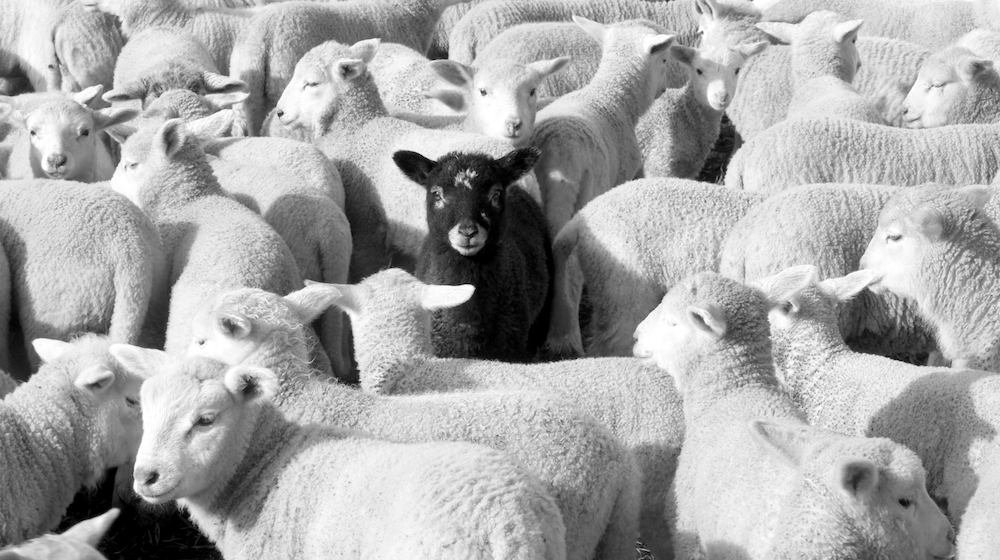
Di sela pemberian penghargaan ketahanan pangan di Istana Negara Kamis siang (15/11) Presiden SBY menyempatkan diri melemparkan lelucon.
Continue reading “Humor SBY, Kambing Hitam, dan Kambing Putih”
