
THE suffering of the Palestinian nation is still one of the most crucial issues in international politics and touches the core of universal human value. The Palestinian people are experiencing untold suffering due to the occupation and brutality of the Zionist army, armed by the United States, as well as oppressive economic privation, while the world is still looking for a fair and lasting solution.
Earlier this week, US President Donald Trump hosted Israeli Prime Minister Benjamin Netanyahu at the White House to urge the Israeli leader to end the war with Hamas in Gaza. Trump reportedly said that Israel agreed to a 60-day ceasefire, while Hamas responded positively to the US-backed proposal.
The latest development has prompted cautious but positive reactions from various countries. If implemented, this would be a new starting point to end the escalating humanitarian crisis in Gaza and the West Bank.
It is hoped that ASEAN will not miss this opportunity to express support for all efforts toward true and lasting peace.
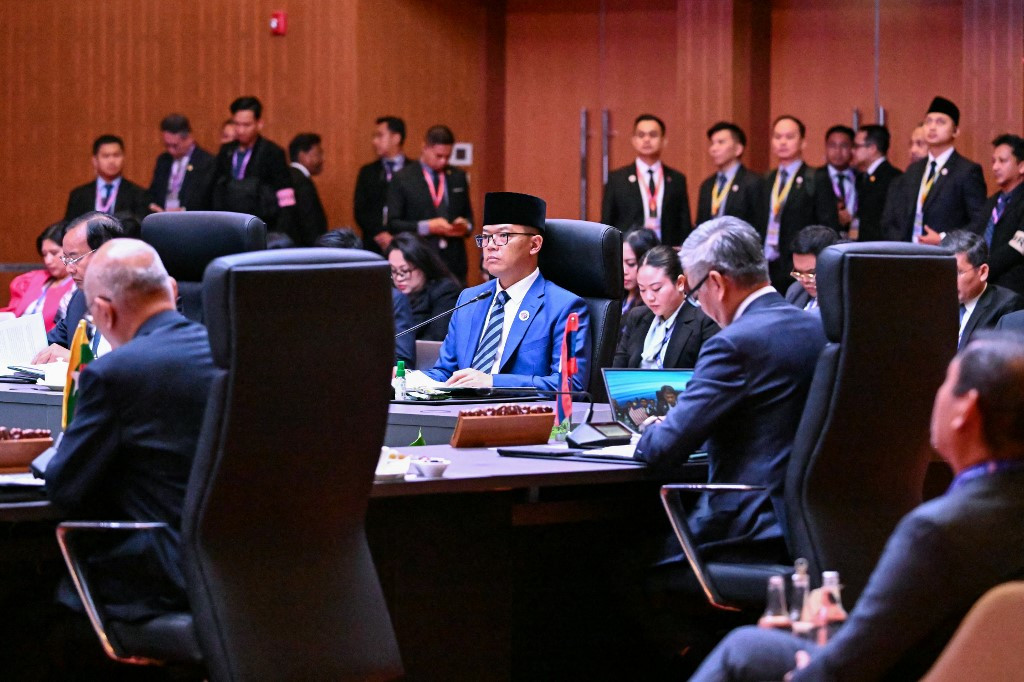
Malaysia as the ASEAN chairman for 2025 and the host of the 58th ASEAN Foreign Ministers’ Meeting (AMM) has a great responsibility to lead the regional voice in supporting the implementation of the ceasefire.
In this context, the meeting in Kuala Lumpur brings new hope, as the Palestinian issue is expected to receive serious attention in line with the latest developments that Israel and Hamas may agree to implement a ceasefire.
The assertion by the Secretary General of the Ministry of Foreign Affairs of Malaysia, Datuk Seri Amran Mohamed Zin, that this is an important issue for ASEAN, should be welcomed. He also said that the foreign ministers’ meeting and the Ministerial Level Meeting of the Fourth Conference of Cooperation of East Asian Countries for the Development of Palestine (CEAPAD IV) will state their position regarding this matter.
CEAPAD IV, which will be jointly led by Malaysia, Japan and Palestine, will focus on capacity building programs, the reconstruction of important infrastructure in Palestine, as well as the provision of comprehensive and effective humanitarian aid.
CEAPAD IV is expected to be the most significant platform for East Asian countries, including ASEAN, to express solidarity with the Palestinian struggle and discuss measures to support the country’s post-conflict reconstruction. ASEAN collectively has long shown consistency in supporting the Palestinian people.
ASEAN Foreign Ministers on Feb. 12 reaffirmed their continued support for the human rights of the Palestinian people, including their right to self-determination and their homeland.
They urged all parties to engage in meaningful dialogue in order to achieve a peaceful and comprehensive solution to the long-lasting conflict, based on a two-state solution in accordance with international law and relevant resolutions of the United Nations Security Council (UNSC) and the United Nations General Assembly (UNGA). This includes UNGA Resolution A/RES/ES-10/23 which was adopted on May 10, 2024 and supported by all ASEAN members.
Malaysia’s Foreign Minister Datuk Seri Mohamad Hasan, when delivering the opening speech at the ASEAN Foreign Ministers’ Meeting in conjunction with the ASEAN Summit at the Kuala Lumpur Convention Center (KLCC) on May 25, said ASEAN cannot remain silent in the face of global crises such as the cruelty and oppression of the Zionist regime against the people of Gaza.
He also affirmed that Malaysia will lead the call to the international community not to be selective in dealing with humanitarian conflicts and support a two-state solution based on the 1967 territorial boundaries as stipulated in the UN Security Council resolution.
This has indeed been voiced by Malaysia in various international forums. Mohamad Hasan himself, for example, when delivering a national statement at the Extraordinary Meeting of the Council of Foreign Ministers of the Organization of Islamic Cooperation (OCI) in Jeddah on March 7, loudly stated that the OIC and the international community are responsible for ensuring that Israel complies with its ceasefire obligations, including allowing humanitarian aid supplies to continue to be channeled to Gaza, implementing the stages after the ceasefire agreement, stopping military operations completely and restarting the process of rebuilding and restoring Gaza.
Based on this factor, the ASEAN foreign ministers will certainly discuss and form a joint position on every development related to the ceasefire negotiations between Israel and Hamas based on the latest negotiations.
This position is in line with the main goal of ASEAN to be a principled voice in international issues, especially those concerning humanity and the rights of the oppressed. ASEAN’s attitude towards the Palestinian issue should be used as a common platform to urge the international community, including major countries, not to continue delaying a just solution for the Palestinian people.
This issue should also be raised in forums such as OIC, UN and G77+China to build international pressure on Israel. This is because the Palestinian conflict is a reflection of the extent to which the world and regions such as ASEAN are ready to defend universal humanitarian principles.
In a world that is increasingly polarized and selective towards the suffering of oppressed people, ASEAN cannot remain silent.
AMM is the best opportunity for ASEAN to emerge as a bloc that is not only strategic from an economic and geopolitical perspective, but also dignified from a moral and humanitarian perspective.
ASEAN’s attitude towards the Palestinian issue will be a benchmark of the region’s commitment to the principles of justice, sovereignty and the right to live in peace for every nation.
As the heart of regional diplomacy, Malaysia is now leading ASEAN towards a louder, more united and bolder voice in speaking the truth about the Palestinian issue. []
 Teguh Santosa